
When sourcing buses for your business, one of the most critical decisions you'll face is choosing between Japanese and Chinese manufacturers. Both options dominate the global bus market, but they cater to very different needs, budgets, and quality expectations.
This comprehensive guide compares Japanese and Chinese buses across all key factors—from initial cost and build quality to long-term reliability and resale value. Whether you're a fleet operator, tour company, or government procurement officer, this analysis will help you make an informed decision.
Quick Answer: Japanese buses cost 30-50% more upfront but typically last 2-3 times longer with significantly lower maintenance costs. Chinese buses offer lower initial investment but may require more frequent repairs and have shorter operational lifespans. Your choice depends on your budget, usage intensity, and long-term goals.
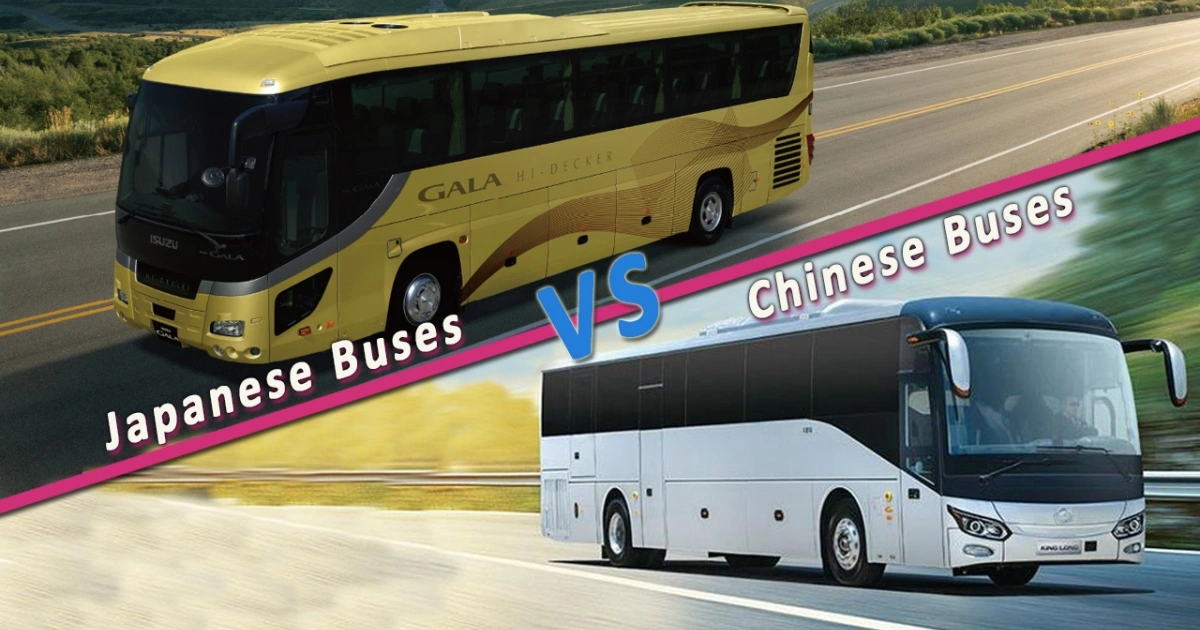
Quick Comparison Overview
| Factor | Japanese Buses | Chinese Buses |
|---|---|---|
| Initial Price | $$$ - Higher (Premium) | $ - Lower (Budget-friendly) |
| Build Quality | ✓ Excellent - Precision engineering | Good - Improving rapidly |
| Reliability | ✓ Outstanding - Proven track record | Moderate - Brand dependent |
| Fuel Efficiency | ✓ Superior - 15-20% better | Standard - Improving |
| Expected Lifespan | ✓ 20-25+ years | 10-15 years |
| Maintenance Costs | ✓ Lower - Less frequent repairs | Higher - More regular maintenance |
| Parts Availability | ✓ Global - Extensive network | Growing - Regional focus |
| Resale Value | ✓ Excellent - 50-60% after 10 years | Moderate - 30-40% after 10 years |
| Technology | ✓ Advanced - Industry-leading | Modern - Catching up |
| Best For | Heavy use, long-term investment | Light use, tight budgets |
1. Build Quality and Engineering Standards
Japanese Buses: Precision Engineering Excellence
Japanese bus manufacturers like Isuzu, Hino, Mitsubishi Fuso, and Nissan have built their reputations on decades of engineering excellence. Their buses are manufactured under strict quality control systems (often ISO 9001 certified and beyond) with attention to detail that's become synonymous with Japanese manufacturing.
Key Quality Features:
- Superior Materials: High-grade steel chassis, corrosion-resistant body panels, premium interior materials
- Precision Assembly: Tolerances measured in millimeters, consistent panel gaps, perfect alignment
- Engine Quality: Legendary diesel engines (like Isuzu's 4HK1 and 6HK1) known for 1,000,000+ km lifespans
- B10 Life Rating: Isuzu engines are rated using the B10 standard, which guarantees that 9 out of 10 engines will run reliably to the rated mileage before requiring major maintenance work.
- Wiring and Electronics: Superior harnesses with weather-resistant connectors
- Paint and Finish: Multi-layer rust protection, UV-resistant paint lasting 10+ years
Chinese Buses: Rapid Improvement in Standards
Chinese manufacturers like Yutong, King Long, Higer, and Golden Dragon have made remarkable strides in quality over the past decade. While historically known for budget options, top-tier Chinese brands now compete more directly with Japanese manufacturers in mid-range markets.
Quality Characteristics:
- Variable Standards: Quality varies significantly between premium and budget brands
- Modern Facilities: State-of-the-art production lines in top factories
- Cost-Optimized Materials: Good quality but not always premium-grade components
- Technology Integration: Often more advanced in electronics and entertainment systems
- Improving Consistency: Better quality control in recent years
2. Reliability and Durability
Japanese Buses: The Gold Standard
Japanese buses have earned a legendary reputation for reliability in demanding markets worldwide—from scorching African deserts to humid Southeast Asian conditions and mountainous Latin American terrain.
Real-World Example: Many African and Asian countries still operate Japanese buses from the 1990s and early 2000s with proper maintenance. It's not uncommon to see Isuzu or Hino buses with over 1 million kilometers on the odometer still in daily service without major engine overhaul—a testament to the exceptional B10 life ratings of Japanese engines.
Why They Last:
- Over-engineered components designed for extreme conditions
- Proven engine designs refined over decades
- Excellent corrosion resistance
- Conservative design philosophy prioritizing durability over features
- Comprehensive testing in diverse climates before market release
Chinese Buses: Improving but Shorter Track Record
Chinese buses have significantly improved in reliability, especially premium models. However, they generally don't match the proven longevity of Japanese vehicles.
Reliability Factors:
- Newer designs mean less long-term performance data
- Some models show issues after 5-7 years of heavy use
- Electronic components may fail earlier than mechanical parts
- Performance varies significantly by brand and model
- Premium Chinese brands (Yutong, King Long) perform better than budget options
3. Total Cost of Ownership Analysis
10-Year Cost Comparison (45-Seater Bus Example)
Japanese Bus (e.g., Isuzu GALA MIO)
- Purchase Price: $85,000 - $110,000
- Fuel Costs (10 years): ~$133,000 (at 4.5 km/L, 50,000 km/year, $1.20/L)
- Maintenance & Repairs: ~$35,000
- Downtime Costs: ~$5,000 (minimal breakdowns)
- Resale Value After 10 Years: -$45,000 to -$55,000
- Total 10-Year Cost: ~$146,000 - $216,000
Chinese Bus (e.g., Yutong ZK6122H)
- Purchase Price: $50,000 - $70,000
- Fuel Costs (10 years): ~$160,000 (at 3.75 km/L, 50,000 km/year, $1.20/L)
- Maintenance & Repairs: ~$60,000 (more frequent)
- Downtime Costs: ~$15,000 (more breakdowns)
- Resale Value After 10 Years: -$15,000 to -$25,000
- Total 10-Year Cost: ~$245,000 - $305,000
Result: Despite 30-50% higher initial cost, Japanese buses are significantly more economical over their lifetime. The Japanese bus saves approximately $89,000 - $99,000 over 10 years due to superior fuel efficiency (saving ~$27,000 over 10 years), dramatically lower maintenance costs, minimal downtime, and excellent resale value.
4. Fuel Efficiency Comparison
Fuel costs represent one of the largest ongoing expenses in bus operation. Japanese manufacturers have decades of experience optimizing diesel engines for efficiency.
| Bus Size | Japanese Average | Chinese Average | Annual Savings (50,000 km/year) |
|---|---|---|---|
| Micro Bus (15-29 seats) | 6-7 km/L | 5-6 km/L | ~$1,680/year |
| Medium Bus (30-40 seats) | 5-6.5 km/L | 4-5.5 km/L | ~$2,000/year |
| Large Bus (40-60+ seats) | 4-5 km/L | 3.5-4.5 km/L | ~$2,600/year |
Based on diesel at $1.20/liter and 50,000 km annual usage
Understanding B10 Life Rating: Isuzu engines achieve impressive B10 life ratings for commercial applications. A B10 rating of 600,000-800,000 km means that 90% of engines will reach this extraordinary mileage before needing major overhaul. In Japan, engine overhauls are typically carried out only after 1,000,000 km—a testament to the conservative engineering and exceptional build quality. This demonstrates the exceptional durability and reliability that sets Japanese buses apart from competitors.
Japanese Buses
- Service Intervals: 10,000-15,000 km (longer intervals)
- Major Overhaul: 800,000+ km
- Common Issues: Minimal - mainly wear items (brakes, tires)
- Parts Cost: Higher individual part costs but fewer replacements needed
- Mechanic Familiarity: Mechanics worldwide know Japanese buses
Chinese Buses
- Service Intervals: 5,000-10,000 km (more frequent)
- Major Overhaul: 300,000-400,000 km
- Common Issues: Electrical problems, sensor failures, suspension components
- Parts Cost: Lower individual costs but more frequent replacements
- Mechanic Familiarity: Growing but less universal knowledge
6. Parts Availability and Support
Japanese Bus Parts Network
✓ Advantages:
- Global parts distribution network established over 50+ years
- Genuine parts available in 150+ countries
- Extensive aftermarket parts ecosystem
- Parts for 20+ year old models still readily available
- Multiple shipping options with fast delivery
Chinese Bus Parts Network
Considerations:
- Growing distribution network, especially in Asia and Africa
- Parts availability declining for older models (5+ years)
- Some regions still depend on direct imports from China
- Longer wait times for less common parts
- Quality variance in aftermarket parts
7. Technology and Features
Japanese Buses: Proven Technology
- Advanced emissions systems (Euro 4, 5, 6 compliant)
- Superior safety systems (ABS, ASR, stability control)
- Comfortable air suspension systems
- Efficient climate control
- Conservative approach—features thoroughly tested before implementation
Chinese Buses: Innovation Focus
- Often more modern infotainment systems
- Advanced connectivity features
- Leading in electric bus technology
- More luxurious interior options at lower price points
- Rapid adoption of new technologies
8. Resale Value and Depreciation
| Age | Japanese Bus Value Retention | Chinese Bus Value Retention |
|---|---|---|
| 3 Years | 70-75% | 55-60% |
| 5 Years | 60-65% | 45-50% |
| 10 Years | 50-55% | 30-35% |
| 15 Years | 35-40% | 15-20% |
Why Japanese buses hold value better:
- Known reliability attracts buyers
- Longer useful life means they're still operational
- Strong demand in developing markets
- Brand reputation commands premium
9. Which Should You Choose?
Choose Japanese Buses If:
- You operate high-mileage routes (50,000+ km/year)
- You need maximum reliability and uptime
- You plan to keep buses for 10+ years
- Fuel efficiency is a priority
- You have budget for higher upfront investment
- You operate in harsh conditions (desert, mountains, etc.)
- Resale value matters to your business model
- Your mechanics are familiar with Japanese vehicles
Choose Chinese Buses If:
- Initial budget is very limited
- You operate low-mileage routes (20,000-30,000 km/year)
- You plan to replace buses every 5-8 years
- Modern features and technology are priorities
- You have good local parts support for Chinese brands
- You're considering electric buses (Chinese lead here)
- Maintenance support is readily available
- Resale value is less important
10. Market-Specific Recommendations
Africa
Recommendation: Japanese Buses
Harsh operating conditions, long distances, and limited service infrastructure favor Japanese buses' proven durability. The extensive parts network in Africa also supports this choice.
Southeast Asia
Recommendation: Japanese Buses (Premium Routes) / Chinese Buses (Budget Routes)
Mixed market with both options viable. Japanese for inter-city and tourist routes; Chinese for short urban routes.
Middle East
Recommendation: Japanese Buses
Extreme heat and demanding conditions require the reliability of Japanese engineering. Strong existing Japanese vehicle presence in the region.
Latin America
Recommendation: Japanese Buses
Mountainous terrain and long-distance routes benefit from Japanese buses' power and durability.
Pacific Islands
Recommendation: Japanese Buses
Salt air corrosion and limited service infrastructure make Japanese buses' superior build quality essential.
Ready to import a Japanese bus? Once you have decided that a Japanese bus is the right choice for your operation, the next step is understanding the import process. Read our comprehensive guide: How to Import a Used Car from Japan: Complete Guide 2026 ›
Ready to Import Quality Japanese Buses?
At Elegant Import & Export, we specialize in exporting premium Japanese buses worldwide. Our inventory includes top brands like Isuzu, Hino, Mitsubishi, and Nissan—all with verified mileage and complete service history.
Why Choose Us:
- 20+ years of experience in Japanese vehicle export
- Direct access to Japan's best bus inventory
- Comprehensive inspection before shipping
- Competitive pricing and worldwide shipping
- Full documentation and export support
Conclusion: Making the Right Choice
Both Japanese and Chinese buses have their place in the global market, but they serve different needs and philosophies:
Japanese buses represent a premium investment in proven reliability, superior engineering, and long-term value. They cost more upfront but typically provide better total cost of ownership over their 20-25 year lifespan. They're the clear choice for operators prioritizing reliability, fuel efficiency, and longevity.
Chinese buses offer accessible entry-level pricing and modern features. They're improving rapidly in quality but still don't match the proven durability of Japanese vehicles. They make sense for operations with limited budgets, low annual mileage, or shorter replacement cycles.
For most commercial operators—especially those running high-mileage routes in demanding conditions—Japanese buses remain the smarter long-term investment despite higher initial costs.
Final Recommendation: If your budget allows, choose Japanese buses for their proven reliability and superior total cost of ownership. If budget is extremely tight, consider quality used Japanese buses over new Chinese buses—you'll often get better long-term value.
Frequently Asked Questions
Are Chinese buses really that much less reliable than Japanese buses?
It depends on the brand and model. Premium Chinese brands like Yutong have improved significantly and can be reliable for moderate use. However, Japanese buses have a proven track record of lasting 25+ years with proper maintenance, while Chinese buses typically last 10-15 years. The reliability gap is narrowing but still significant.
Can I find parts for a 15-year-old Japanese bus?
Yes, absolutely. One of the major advantages of Japanese buses is the extensive global parts network. You can still easily find parts for buses from the 1990s and early 2000s. Major brands like Isuzu and Hino maintain comprehensive parts catalogs going back decades.
How much can I save on fuel with a Japanese bus?
Japanese buses typically achieve 15-20% better fuel efficiency than comparable Chinese models. For a bus running 50,000 km per year, this translates to approximately $2,000-$2,500 in annual fuel savings, depending on fuel prices in your region.
Are Chinese electric buses better than Japanese options?
Chinese manufacturers, particularly BYD and Yutong, are currently leaders in electric bus technology with more models and better pricing. If you're specifically looking for electric buses and have charging infrastructure, Chinese options are competitive. However, for diesel buses, Japanese manufacturers still lead in overall quality and reliability.
What's the real-world lifespan difference?
Japanese buses regularly achieve 20-25+ years of operational life with proper maintenance. Many are still running with over 1 million kilometers. Chinese buses typically last 10-15 years before major issues arise or replacement becomes necessary. This means a Japanese bus can potentially serve twice as long.
Will mechanics in my country know how to service Japanese buses?
Most likely, yes. Japanese buses have been exported globally for 50+ years, so mechanics in virtually every country have experience with them. Chinese buses are newer to many markets, so finding experienced technicians can be more challenging outside of Asia.
Is the higher price of Japanese buses worth it?
For most commercial operations, yes. While Japanese buses cost 30-50% more upfront, their superior fuel efficiency, lower maintenance costs, longer lifespan, and better resale value often make them more economical over their lifetime. The break-even point is typically reached within 5-7 years for high-usage applications.
Can I import used Japanese buses instead of buying new Chinese buses?
Absolutely, and this is often an excellent strategy. A well-maintained used Japanese bus (5-10 years old) often costs similar to or less than a new Chinese bus while offering superior build quality and longer remaining lifespan. This is one of the most popular options for budget-conscious operators who still want Japanese quality.
What about warranty support?
New Japanese buses typically come with 2-3 year warranties and have excellent dealer networks. Chinese manufacturers often offer longer warranty periods (3-5 years) but may have limited support networks outside Asia. For used Japanese buses, the proven reliability means many operators are comfortable without extensive warranty coverage.
Which Japanese bus brand is the best?
All major Japanese brands (Isuzu, Hino, Mitsubishi Fuso) offer excellent quality. Isuzu and Hino are particularly renowned for buses and have the largest global presence. The choice often comes down to parts availability in your specific region and personal preference. All are significantly more reliable than budget Chinese alternatives.